
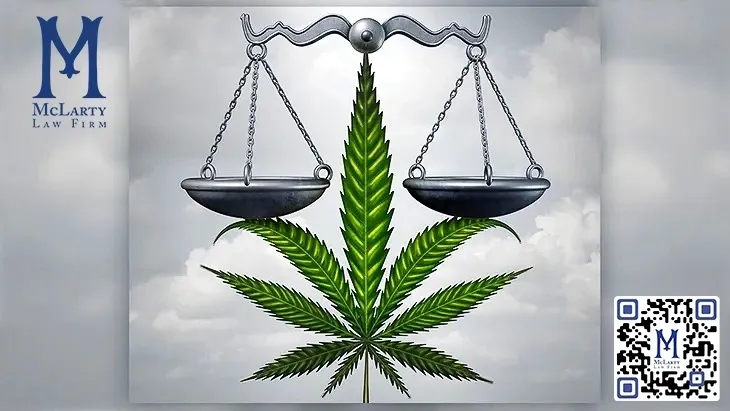
Arrested For Marijuana Possession? Call The McLarty Law Firm and speak with Marijuana Defense Attorney Chelsi McLarty
Hey there—if you’re reading this, chances are you’ve got a knot in your stomach from a recent run-in with the law over some marijuana. I get it; it’s scary, confusing, and the last thing you need is a bunch of legalese making it worse. I’m Chelsi McLarty, a criminal defense attorney right here in Fort Worth at The McLarty Law Firm, and I’ve been in your shoes with clients just like you. Over the years, I’ve helped folks navigate these charges, from first-time slip-ups to more serious cases, and I want to break it down for you in plain English. No jargon, no judgment—just straight talk so you can breathe a little easier and know your options.
Let’s start with the basics: In Texas, marijuana possession is still treated as a crime under state law, even though attitudes (and some local enforcement) are shifting. We’re not in a full-legalization state like our neighbors to the west, but things aren’t as black-and-white as they used to be. If you’ve been charged, the key is understanding what the charge means, what penalties could be on the table, and how we can fight back. Stick with me, and by the end, you’ll see why getting a skilled defense attorney in your corner isn’t just smart—it’s essential. And since you’re probably burning with questions like “What’s the penalty for a first offense?” or “Is this decriminalized around here?”, I’ll tackle those head-on right in the mix.
What Counts as "Possession" Anyway?
Picture this: You’re driving home, a cop pulls you over for a taillight, and suddenly they’re asking about that faint smell. Or maybe it’s a house search gone wrong. Possession doesn’t have to mean a backpack full of weed—it can be as little as a single joint in your pocket or even residue on a grinder. Under Texas Health and Safety Code Section 481.121, the state says you “possess” marijuana if you know it’s there and you control it. That “control” part is huge because it opens the door to arguments like “Hey, that wasn’t mine” or “I had no idea it was in the car.”
I’ve seen cases where someone gets tagged for “constructive possession” just because they were in a room with someone else’s stash. It’s not fair, but it’s how the law works. The good news? We can poke holes in that story. Was there proof you knew about it? Fingerprints? Your DNA? If not, that’s where we start building your defense.
The Penalties: It Depends on How Much You Had (Allegedly)
Texas grades these charges based on quantity, and yeah, it can feel like they’re throwing the book at you for something small. But you asked: **What is the penalty for a first offense possession of marijuana in Texas?** Straight up—for a first-time possession of up to 2 ounces, it’s classified as a Class B misdemeanor. That means you’re looking at up to 180 days in county jail and a fine of up to $2,000. Now, in practice, especially here in Tarrant County, judges often lean toward probation, community service, or deferred adjudication for clean-record folks like many first offenders. Deferred adjudication is a game-changer—it lets you complete terms (like drug education classes) and get the case dismissed, keeping it off your permanent record. But don’t assume you’ll skate by; the DA pushes hard unless you’ve got a lawyer negotiating from day one. I’ve turned countless first-offense headaches into minor blips for my clients by highlighting lack of priors, cooperation, and solid alibis.
Here’s the quick rundown on escalating penalties:
- Up to 2 ounces**: Class B misdemeanor (as above). First offense? Often lighter, but still serious.
- 2 to 4 ounces**: Class A misdemeanor. Bumps up to a year in jail and $4,000 fine. This is where things get stickier, especially if it’s in a drug-free zone like near a school.
- 4 ounces to 5 pounds**: State jail felony. 180 days to 2 years behind bars, plus fines up to $10,000. Ouch.
- More than that?** It escalates to third-degree felony territory—2 to 10 years and $10,000 fines. And if it’s enhanced (like in a vehicle or with intent to deliver), penalties skyrocket.
B You also wondered, **How many grams is considered a felony in Texas?** The felony line kicks in at 4 ounces, which is about 113 grams. Anything under that (up to 2 oz or ~57 grams) stays misdemeanor territory for possession alone. Over 113 grams? You’re in felony land, and that’s when state prison becomes a real threat. But remember, these are raw amounts—intent to distribute can flip even small quantities into felonies faster than you can say “enhancement.”
But listen, these are maximums. I’ve knocked down felonies to misdemeanors, gotten charges dropped entirely, or secured pretrial diversions that keep it off your record. The DA’s office in Tarrant County isn’t always out for blood, but they won’t go easy unless you push back with a pro.

Common Defenses: You're Not Out of Options Yet
Facing charges doesn't mean game over—far from it. As your attorney, my job is to flip the script and make the prosecution prove their case beyond a reasonable doubt. Some go-to defenses I've used successfully:
- Illegal Search and Seizure**: Fourth Amendment violations happen more than you’d think. If the cop didn’t have probable cause or a valid warrant, that evidence gets tossed. I’ve had entire cases evaporate because of a bad traffic stop.
- Lack of Knowledge or Control**: Borrowed a friend’s car? Shared an apartment? We can argue you didn’t “possess” it knowingly. Chain of custody issues are gold for us.
- Medical Use Angle**: Texas has a limited compassionate use program for low-THC cannabis if you qualify for conditions like epilepsy or PTSD. Even if it’s not a perfect fit, it can sway a judge toward leniency.
- Entrapment or Officer Misconduct**: Rare, but if an undercover officer set you up, we’ll expose it.
And don’t forget about challenging the lab tests—false positives from poor handling aren’t uncommon. The point is, every case has cracks; we just need to find them.
Now, on that burning question: **Is marijuana decriminalized in Tarrant County?** Not fully, unfortunately—Texas state law still rules the roost, and possession remains a criminal offense county-wide. That said, Tarrant County (home to Fort Worth) has made strides with progressive policies like the Tarrant County Pre-Trial Diversion Program, which can divert first-time, low-level possession cases away from full prosecution. Some North Texas cities have pushed for citations over arrests for tiny amounts (under 2 oz), but it’s not blanket decriminalization like in Austin or Dallas suburbs. Enforcement can vary by officer and judge, but without a lawyer, you’re rolling the dice.
I’ve leveraged these local programs to get clients into diversion instead of court—it’s not amnesty, but it’s a hell of a lot better than a conviction.

What Happens Next? Your Timeline, Rights, and Bail Breakdown
Right now, you’re probably wondering about arraignment, discovery, and all that court jazz. Here’s the flow: After arrest, you’ll get a citation or booking, then a court date. You have the right to remain silent (use it!), bond out if eligible, and hire counsel ASAP. In Fort Worth, our courts move pretty quick, so don’t drag your feet.
Speaking of bonding out, you asked: **How much is bail for marijuana possession in Texas?** It varies wildly by county, charge severity, your record, and even the judge’s mood on the day. For a basic first-offense misdemeanor (under 2 oz), expect $500 to $2,500 in Tarrant County—sometimes as low as $300 for the smallest amounts if it’s a citation. Felony possession? That jumps to $5,000–$20,000 or more, especially if enhanced. Bondsmen can front it for 10-15% non-refundable fee, but cash bonds are rare. Pro tip: Don’t post it yourself without advice; I’ve negotiated reductions down to personal recognizance (free release) by showing up early and strong. In Fort Worth’s 396th District Court, for example, they’ve been reasonable lately for non-violent first-timers.
Pro tip from me to you: Skip the public defender if you can—they’re swamped. A private firm like ours gives you personalized attention, from negotiating pleas to taking it to trial if needed.
non-refundable fee, but cash bonds are rare. Pro tip: Don’t post it yourself without advice; I’ve negotiated reductions down to personal recognizance (free release) by showing up early and strong. In Fort Worth’s 396th District Court, for example, they’ve been reasonable lately for non-violent first-timers.
Pro tip from me to you: Skip the public defender if you can—they’re swamped. A private firm like ours gives you personalized attention, from negotiating pleas to taking it to trial if needed.
Wrapping It Up: Why You Need a Fort Worth Marijuana Defense Expert Today
At the end of the day, a marijuana possession charge isn’t just about the weed—it’s about protecting your job, your family, your future. Texas laws are tough, but they’re not unbreakable, and with the right strategy, you can walk away stronger. That’s my promise as a defense attorney who’s passionate about second chances.
In the maze of Texas marijuana laws, knowledge is your shield and a dedicated attorney your sword—don’t let a momentary mistake define you when experienced guidance can rewrite the ending.
Ready to fight back? Call The McLarty Law Firm today – (817) 900-3235 – for a free consultation with Marijuana Defense Attorney Chelsi McLarty. We’re here to listen, strategize, and win. Visit our website – click here777 Main St #600, Fort Worth, TX 76102 – Swing by.
You’ve got this—one step at a time. Let’s talk soon.