

Navigating the Courthouse: The Tim Curry Criminal Justice Center in Fort Worth
Navigating the Tim Curry Criminal Justice Center in Fort Worth can feel overwhelming, especially if it’s your first time facing the Texas court system. This multi-level, postmodern facility is the hub for criminal cases in Tarrant County, housing everything from misdemeanor to felony trial courtrooms. At The McLarty Law Firm, we understand that uncertainty adds to the stress of a criminal charge. That’s why we’ve created this guide to help you understand where to go, what to expect, and how to confidently navigate each step of your court appearance inside the Tim Curry Criminal Justice Center.
What Time Should I Be in Court?
At The McLarty Law Firm, we can’t stress this enough—timing matters. Showing up late to court sends the wrong message to your judge and can have serious consequences. Remember, the time listed on your court notice is when your case is called in the courtroom, not when you should be looking for parking or entering the building.
Parking in downtown Fort Worth near the Tim Curry Criminal Justice Center can be challenging, and getting through security can take longer than expected. That’s why we instruct all our clients to arrive at least 30 minutes early for their scheduled court appearance. This gives you a buffer for traffic, elevator delays, or long security lines—helping you walk into court calm, confident, and on time.
What Happens When I Get to My Courtroom?
Once you arrive at the courthouse and find your assigned courtroom, here’s what to expect:
- If the courtroom is open, go inside and check in with the bailiff.
- If it’s still closed, wait patiently outside until the bailiff allows people in.
- Once inside, follow any instructions the bailiff gives. Some courts require you to check in directly; others simply ask you to sit and wait until the judge starts docket call.
Docket call is when the judge takes attendance and makes sure everyone scheduled for court that day is present. If your name is called, answer clearly and out loud—this is how the court knows you’re there. If you don’t respond, it could result in a warrant for your arrest.
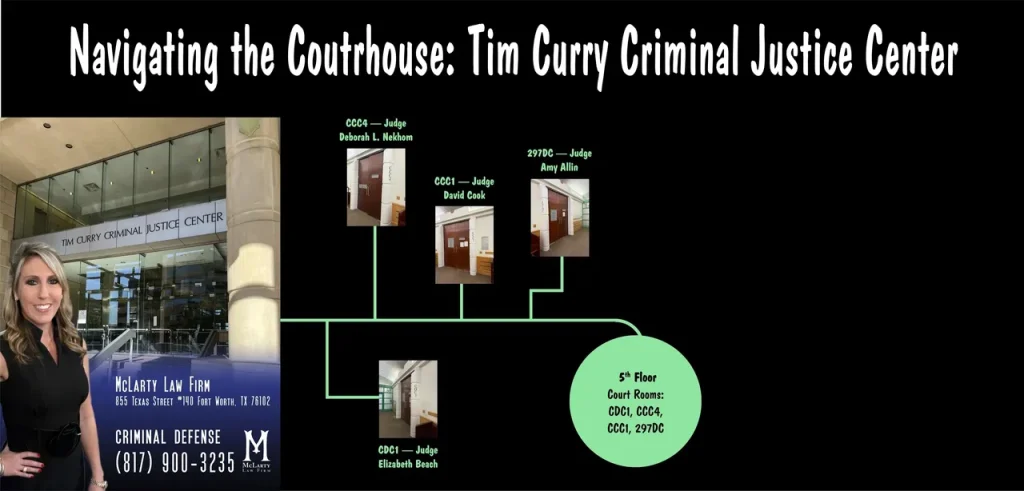
Level Five Courtrooms Include:
Misdemeanor Courtrooms
- CCC1 – Judge David Cook
- CCC4 – Judge Deborah Nekhom
Felony Courtrooms
- CDC1 – Judge Elizabeth Beach
- 297thDC – Judge Amy Allin
Level Six Courtrooms Include:
Misdemeanor Courtrooms
- CCC2 – Judge Carey Walker
- CCC10 – Judge Trent Loftin
Felony Courtrooms
- CDC2 – Judge William Knight
- 371stDC – Judge Ryan Hill
- 372ndDC – Judge Julie Lugo
- 432ndDC – Judge Ruben Gonzalez
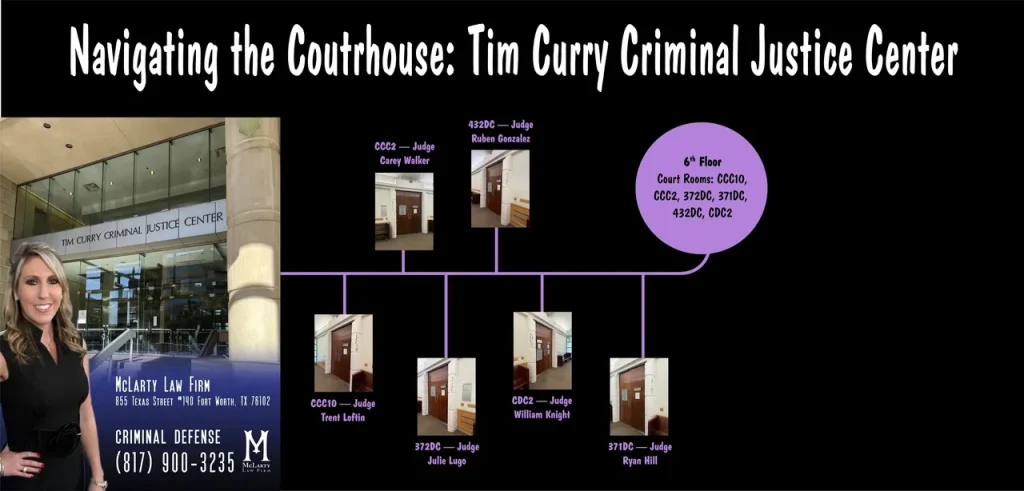
Level Six Courtrooms Include:
Misdemeanor Courtrooms
- CCC2 – Judge Carey Walker
- CCC10 – Judge Trent Loftin
Felony Courtrooms
- CDC2 – Judge William Knight
- 371stDC – Judge Ryan Hill
- 372ndDC – Judge Julie Lugo
- 432ndDC – Judge Ruben Gonzalez
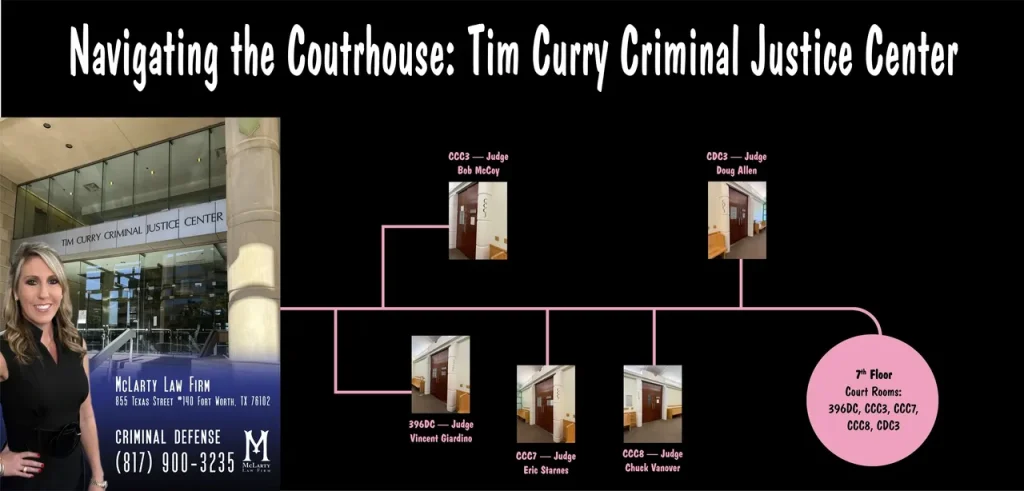
Level Seven Courtrooms Include:
Misdemeanor Courtrooms
- CCC3 – Judge Bob McCoy
- CCC7 – Judge Eric Starnes
- CCC8 – Judge Chuck Vanover
Felony Courtrooms
- CDC3 – Judge Doug Allen
- 396thDC – Judge Vincent Giardino
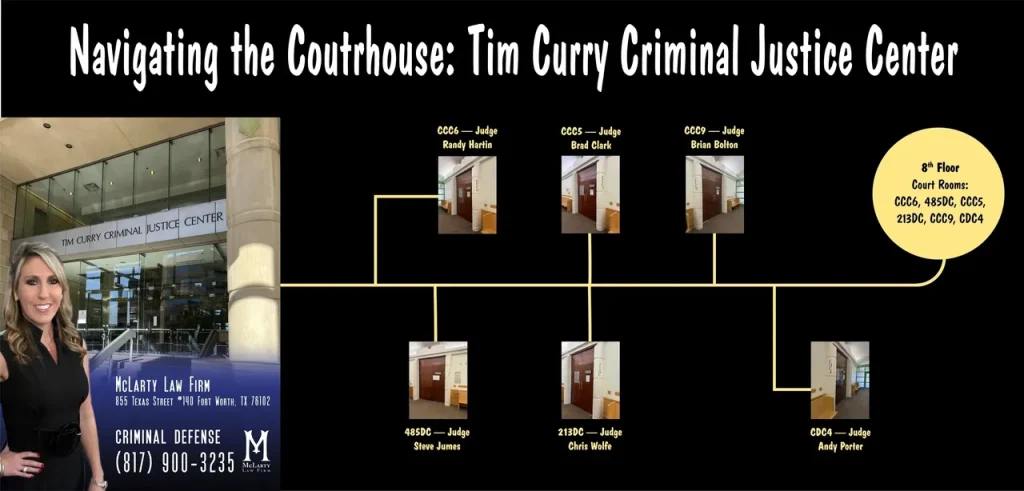
Level Eight Courtrooms Include:
Misdemeanor Courtrooms
- CCC5 – Judge Brad Clark
- CCC6 – Judge Randi Hartin
- CCC9 – Judge Brian Bolton
Felony Courtrooms
- CDC4 – Judge Andy Porter
- 213thDC – Judge Chris Wolfe
- 485thDC – Judge Steve Jumes
What to Expect During Your Court Appearance
The average docket can last two to three hours, depending on how many cases are on the schedule. Much of your time may be spent waiting for your case to be reached. When your McLarty Law attorney arrives, they will begin working on your behalf by discussing your case with the prosecutor. With dozens of defense attorneys and only a few prosecutors, it may take time for those conversations to happen. Your attorney will go over:
- The facts of your case and any available evidence
- Whether the State is making a plea offer
- Possible diversion programs or pretrial options
- Whether more information is needed before making decisions
Once your attorney has a clear understanding of the State’s position, you’ll discuss how to proceed. Generally, you will have three options:
- Accept a plea agreement
- Reject the offer and proceed to trial
- Request a reset (another court date) to allow more time for investigation or negotiation
Be aware: The number of times your case can be rescheduled depends on the judge and the specific circumstances of your case.